
By María José Gamba
The North American freight transportation industry faces a chronic and increasingly acute crisis: a severe shortage of certified commercial drivers. The average age of truckers continues to rise, and the influx of new talent is failing to offset retirements and high turnover rates. This problem is especially critical in the US-Mexico cross-border corridor, where a unique combination of skills is required: Class A commercial driver’s licenses (CDLs), knowledge of both countries’ regulations, and—critically—bilingual fluency to interact seamlessly with U.S. Customs, dispatchers, and terminals. Addressing this widening gap is fundamental to sustaining the growth fueled by nearshoring.
Analyzing the Shortage: Beyond the Paycheck
While competitive wages and the quality of life on the road are significant factors, the talent shortage stems from deeper structural and cultural causes prevalent across the North American market:
Evolving Perception of the Trade: The driving profession is often still perceived as physically demanding, leading to extended time away from home and disrupting family life. Millennials and Gen Z prioritize work-life balance and schedule flexibility, viewing traditional long-haul trucking as incompatible with their values.
Significant Barriers to Entry: Obtaining the necessary licenses and certifications—especially a commercial driver’s license (CDL), specialized endorsements, and secure border credentials like FAST (Free and Secure Trade) or the TWIC card for port access—is a lengthy and expensive process that often discourages younger, debt-averse applicants.
The Nearshoring Demand Surge: The recent influx of manufacturing plants and the exponential growth of the USMCA trade corridor have dramatically increased the demand for just-in-time ground transportation, exerting extreme pressure on the already dwindling talent pool.
The solution requires a fundamental shift in how the industry presents the job opportunity and the professional support it offers.
Strategies for Attracting and Retaining the Next Generation
To attract and retain the future operators, transportation companies must modernize their approach by integrating technology, improving work conditions, and investing in human capital.
Technology as a Comfort and Safety Tool: Equipping units with the latest technology—including advanced driver-assistance systems (ADAS), premium infotainment systems, digital logging devices (ELDs), and integrated safety cameras—improves comfort, safety, and the overall dignity of the work. The younger generation expects and values working with cutting-edge technology that simplifies compliance and reduces fatigue.
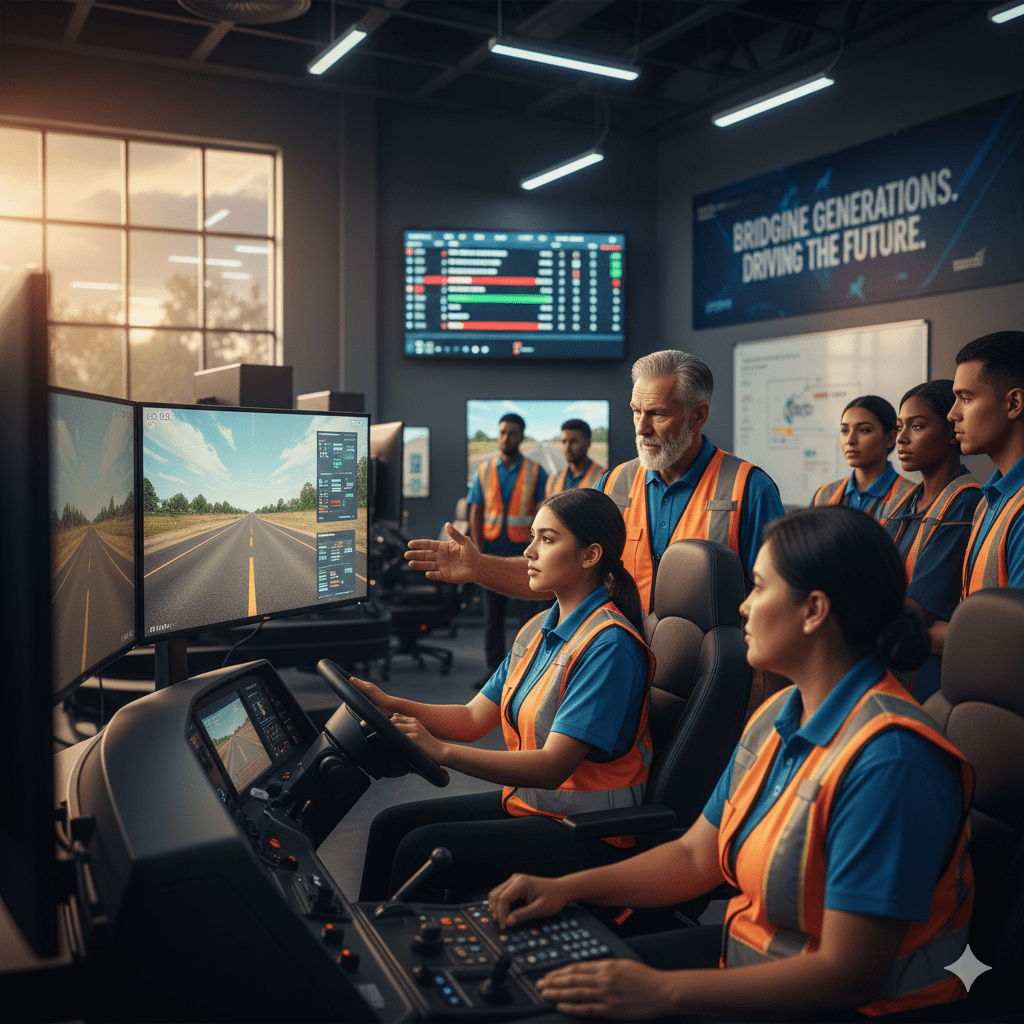
Robust Training and Mentorship Programs: Establishing partnerships with technical schools and implementing structured internal mentorship programs allows seasoned drivers to transfer their invaluable knowledge to new hires. Companies should consider subsidizing the entire certification process, including examination fees and licensing costs, in exchange for a service commitment.
Competitive Wages and Hybrid Work Models: Moving beyond compensation strictly based on mileage, companies should offer performance-based salary structures that reward safe driving and efficiency. Furthermore, exploring work models that prioritize home time—such as rotating shorter regional routes or dedicated border shuttle operations—significantly improves quality of life and directly reduces turnover rates.
The Imperative of Bilingual and Certified Talent
For cross-border transportation, bilingualism and certification are the value proposition that defines a premium operator.
Bilingualism as a Salary Advantage: An operator who can communicate fluently with U.S. dispatchers, brokers, and CBP (Customs and Border Protection) officials minimizes waiting times, reduces communication errors, and facilitates smoother border crossings. This valuable soft skill must be recognized through a superior salary package or substantial bilingual bonus.
Investing in FAST/C-TPAT Certification: Investing in the driver’s security certification (FAST) not only significantly accelerates the border crossing process (which translates into more runs and higher potential earnings) but also elevates the professional profile and enhances the driver’s personal security. This demonstrates the carrier’s commitment to compliance and efficiency.
Focus on Safety and Compliance Culture: Retention is solidified when the company proves it values the operator’s well-being above all else. This includes modern, well-maintained vehicles, 24/7 monitoring support, and strict adherence to safety protocols and labor regulations, including FMCSA (Federal Motor Carrier Safety Administration) rules.
Ground transportation is the backbone of the USMCA trade corridor. Without skilled, certified, and motivated operators, the nearshoring boom cannot be sustained. Investing in human talent is, now more than ever, an investment in business continuity and growth.
At America’s Freight Forwarding, we are committed to operator excellence, offering premium training programs and fostering a culture that prioritizes safety and bilingualism, ensuring we deploy the best talent for your cross-border cargo. Join our mission to move the continent!